
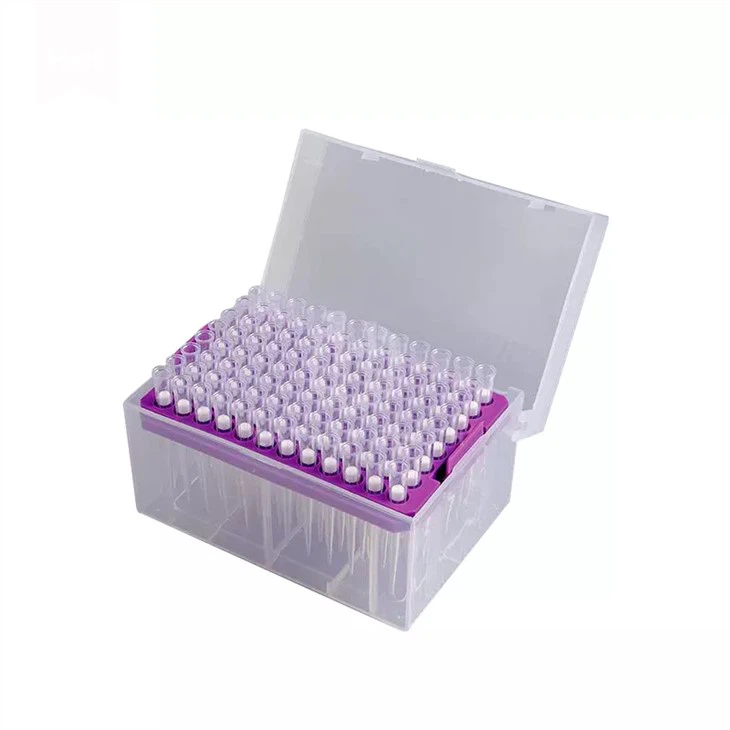
Pipette tips are made of raw materials of high transparency PP material,They has excellent quality to fit for multi brand pipettes. In addition, The inner surface is smoothly , high transparent, tip is straight with high accuracy,and both normal and of low-retention for customer choose.
Key Specifications to Consider
- Purity: Look for certifications such as DNase/RNase free and Non-pyrogenic.
- Material: Most high-quality tips use high-transparency Polypropylene (PP).
- Volume Range: Common sizes include 10µL, 20µL, 100µL, 200µL, 1000µL, and 1250µL.
- Packaging: Options include bulk (bagged), racked, or sterile refill formats.
Primary Functions
- Contamination Prevention: They block aerosols—microscopic droplets formed during liquid aspiration—from entering the pipette barrel, which prevents cross-contamination between different samples.
- Instrument Protection: The filter acts as a physical shield against corrosive reagents, radioactive materials, or viscous samples that could damage internal components like piston seals and O-rings.
- Sample Integrity: Filters ensure that any contaminants already present inside the pipette shaft do not fall into and ruin the current sample.
Key Types and Features
- Standard Filter Tips: Common disposable tips used for sensitive work like PCR, qPCR, and NGS.
- Self-Sealing Filters: These filters contain additives that cause the pores to swell and block completely if they come into contact with liquid, providing a hard fail-safe against over-aspiration.
- Aerosol Barrier Filters: High-purity filters designed specifically to trap airborne particles and droplets without affecting airflow.
- Safe-Cone Filters: Replaceable filters placed directly inside the pipette’s tip cone for long-term protection, often used in multi-channel pipettes.
When to Use Them
Using a filter is considered essential when handling:
- Nucleic Acids (DNA/RNA): To prevent false positives in amplification.
- Infectious or Radioactive Samples: To protect the user and the equipment from hazardous aerosols.
- Volatile or Corrosive Chemicals: To prevent vapors from degrading the pipette’s internal mechanisms.
Reviews
There are no reviews yet.