
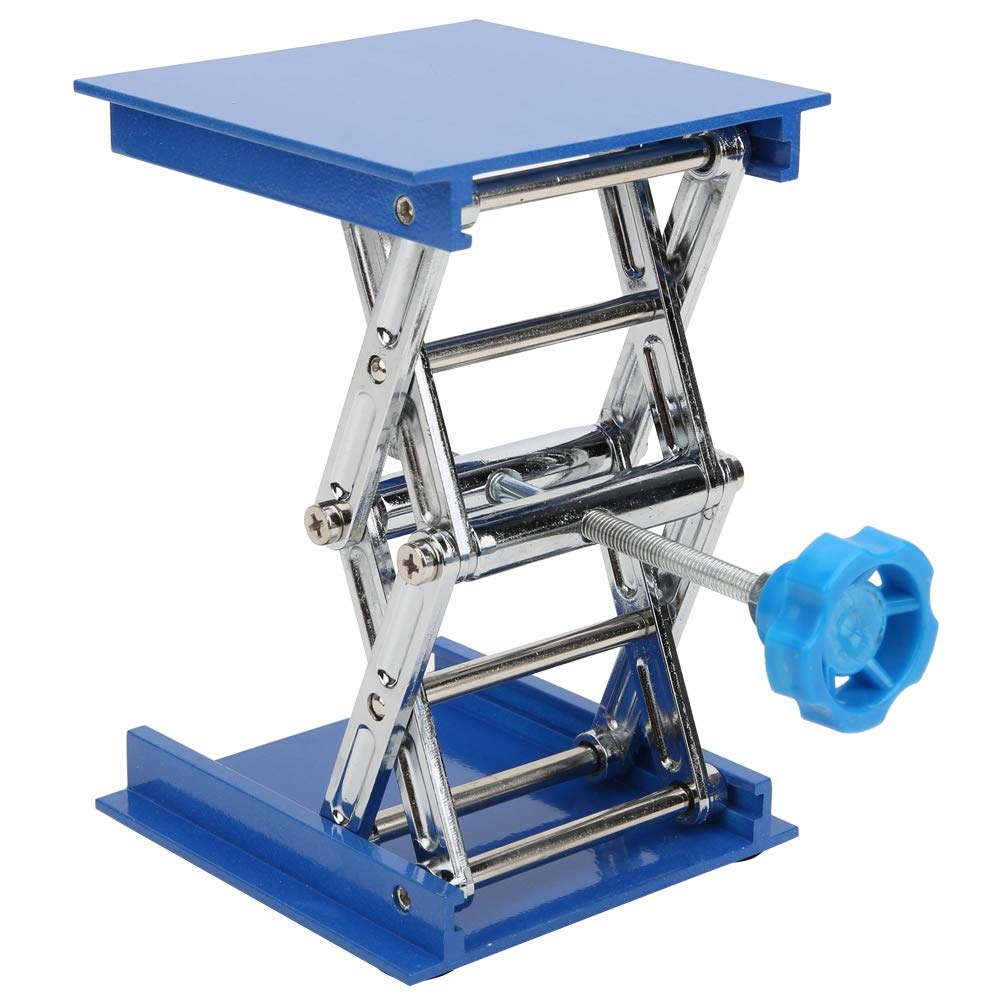
In a laboratory environment, the most common lifting device used to adjust the height of equipment is a laboratory jack (also known as a lab jack or scissor lift). These devices provide stable, precise vertical displacement for items like hot plates, flasks, baths, and various testing apparatuses.
Primary Types of Lab Lifting Devices
- Scissor Jacks (Z-Lift): The standard manual lab jack utilizing a central screw and a handwheel to collapse or expand parallel metal struts. They are typically made of chemically resistant stainless steel or anodized aluminum.
- Electric/Remote Control Lifts: Motorized platforms controlled via buttons or a remote for heavy or highly sensitive equipment up to 60 kg, preventing physical vibrations during adjustment.
- Heavy Duty Material Hoists: Floor-mounted lifters, vacuum tube systems, or custom material handling lifters used in larger analytical or national research laboratories to load blenders, reactors, and mass spectrometers safely.
Common Applications
- Optical & Laser Setup: Aligning beam heights precisely using fine-tuning axes.
- Distillation & Synthesis: Raising heating mantles or water baths into contact with glassware, and lowering them quickly to halt a reaction.
- Material Testing: Supporting heavy analytical instruments, shake tables, or specific structural test equipment.

Reviews
There are no reviews yet.