
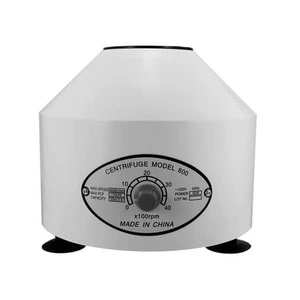
A centrifuge is a device that uses centrifugal force—generated by rapid rotation—to separate substances of different densities. By spinning a sample at high speeds, the machine forces denser particles to move outward (toward the bottom of a tube), while lighter components migrate toward the center (the top).
Core Functions and Principles
- Rapid Sedimentation: Centrifuges accelerate the natural process of gravity-based settling. What might take days under normal gravity can happen in minutes.
- Separation Variables: Effectiveness depends on the sample’s density, size, and shape, as well as the rotational speed (measured in RPM).
- Key Force: The “outward pull” exerted on a revolving object is the centrifugal force, which acts as a powerful filter for separating solids from liquids or immiscible liquids (like cream from milk).
Common Types of Centrifuges
Centrifuges are often categorized by their speed, size, and specific laboratory or industrial use:
| Type | Typical Use Case | Key Features |
|---|---|---|
| Microcentrifuge | Small volumes (0.2–2.0 mL) like DNA/RNA extraction. | High speed, compact footprint. |
| Clinical Centrifuge | Diagnostic labs for blood and urine analysis. | Moderate speeds; holds standard collection tubes. |
| Ultracentrifuge | Isolating viruses, proteins, or cellular organelles. | Extremely high speeds (up to 80,000+ RPM); requires a vacuum. |
| Refrigerated Centrifuge | Heat-sensitive biological samples. | Built-in cooling to prevent sample degradation. |
| Decanter/Industrial | Wastewater treatment and food processing. | Continuous operation for large-scale liquid-solid separation. |
Practical Applications
- Medical Diagnostics: Separating blood components (plasma, serum, and cells) for testing and transfusions.
- Molecular Biology: Purifying nucleic acids (DNA/RNA) and proteins.
- Industry: Separating oil from water, clarifying juices, and even extracting water from clothes in a laundry drum (a simple form of centrifuge).
- Research: Studying the sedimentation rates and physical properties of particles.
Operational Tip: Always ensure the rotor is balanced. If you have an odd number of samples, add a “balance tube” filled with water of equal weight to prevent damaging the machine.
Would you like to know more about a specific type of centrifuge or the math used to calculate its separation force?

Reviews
There are no reviews yet.