
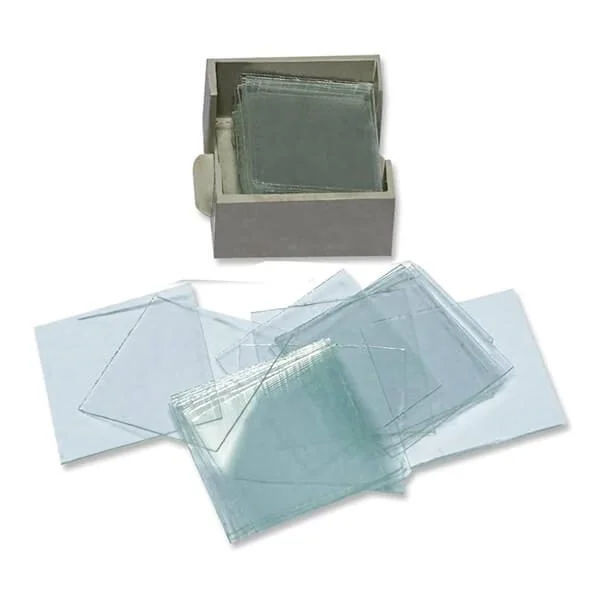
Cover glass refers to two main types of thin, protective glass used in different industries: microscopy and electronics.
1. Microscopy (Coverslips)
In scientific labs, a cover glass (or coverslip) is a very thin sheet of transparent material, usually 0.13 to 0.22 mm thick.
- Purpose: It is placed over a specimen on a microscope slide to flatten liquid samples, keep the specimen in place, and protect the microscope’s objective lens from contact.
- Standard Size: Common sizes include 18×18 mm or 22×22 mm.
- Material: Usually made of chemically resistant borosilicate glass to ensure optical clarity for high-resolution imaging.
2. Electronics (Display Cover Lens)
In consumer electronics, cover glass is the outermost layer of a device’s display, such as on a smartphone, tablet, or smartwatch.
- Purpose: It acts as a “sacrificial barrier” to protect the sensitive internal display and touch sensors from scratches, drops, and daily wear.
- Materials:
- Aluminosilicate Glass: High-strength options like Corning Gorilla Glass or AGC Dragontrail.
- Soda-Lime Glass: A more cost-effective, standard glass used in less demanding applications.
- Features: Often treated with chemical strengthening (ion exchange) and coatings to resist fingerprints (oleophobic) or reduce glare (anti-reflective)
Reviews
There are no reviews yet.