
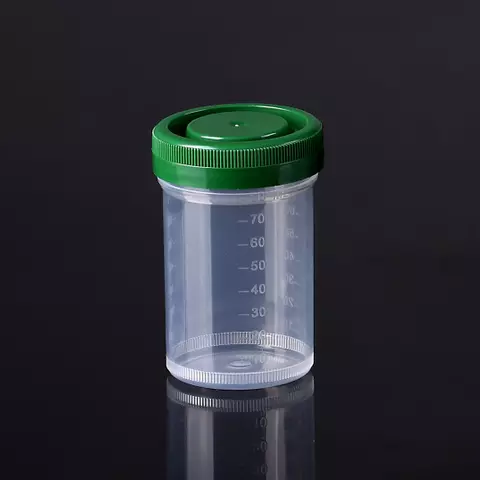
- Dimensions: Approximately 90mm in diameter and 120mm in height.
- Capacity: Often categorized alongside volumes ranging from 90ml to 120ml for clinical use, though the physical 90x120mm dimensions typically offer a higher displacement for larger tissue samples.
- Wide-Mouth Design: Features a full-diameter opening that allows for the easy insertion of bulky specimens or glass-plate mounted samples.
- Sealing Mechanisms:
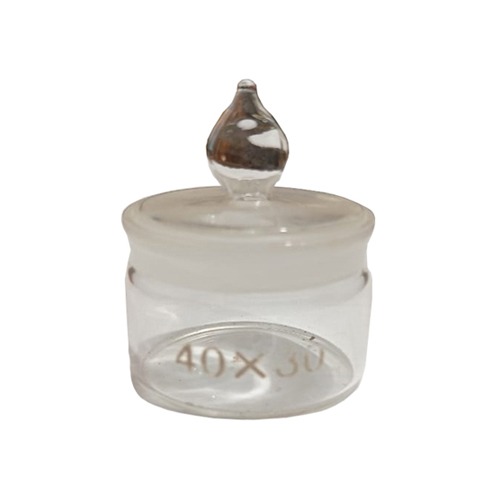
- Glass Jars: Usually feature a ground-in glass stopper or a knobbed lid for an airtight, chemically resistant seal.
- Plastic Containers: Often utilize a screw-on metal or plastic cap with a leak-proof liner to prevent spills during transport
Common Materials
- Borosilicate or Soda-Lime Glass: Preferred for high chemical inertness, thermal stability, and clarity in museum displays or analytical testing.
- Polypropylene (PP): A lightweight, shatterproof, and often autoclavable material (resistant up to 121°C) used frequently for medical urine or histology samples.
- Polystyrene (PS): Offers high clarity for visual inspection but is more brittle than
Reviews
There are no reviews yet.